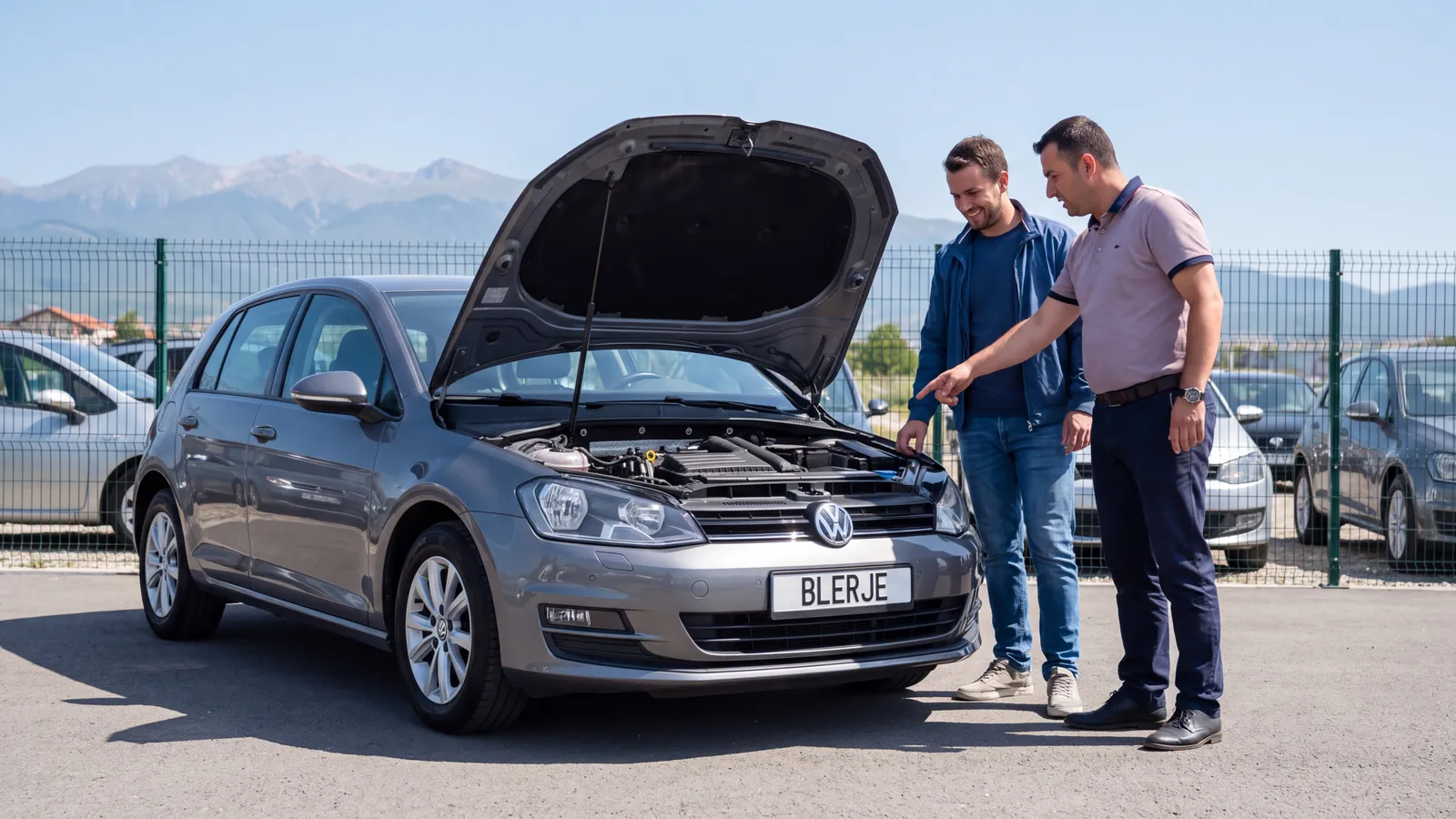
The short answer
Look at the car in daylight and dry weather. Check the bodywork, the tyres and the engine from cold, make sure every warning light goes out after starting, drive it for at least twenty minutes and compare the chassis number (VIN) on the car with the papers. For imported cars, ask for the service history. If something does not add up and the seller pushes, walk away.
The essentials
- Look at the car in daylight and dry weather: rain and dusk hide scratches.
- Start the engine cold: a pre-warmed engine hides hard starting and smoke.
- The chassis number on the car must match the one in the papers.
Before you set off
The check starts on the phone. Ask for the chassis number (VIN), photos of the registration document and, for imported cars, the service history. A seller who will not share these before the meeting usually has a reason. Compare the price with the market value: a car far below the market value is rarely a coincidence.
With the chassis number you can look up the history with international services such as carVertical or autoDNA. They are not complete, but often show mileage readings over the years, reported accidents or a car sold as damaged. For cars from Germany, the service book and the inspection (TÜV, Dekra and others) reports count for more.
Outside: bodywork and tyres
Look at the car in daylight and dry weather. Rain and dusk hide scratches, rust and repainted panels. If the seller insists on the evening, make another appointment.
- Panel gaps must be even. Uneven gaps usually point to accident repair.
- Paint in raking light: different shades show repainted panels.
- Rust on door edges, sills, under the boot carpet and around the rear window.
- Glass: all windows should have the same maker and year. One different window may mean an accident.
- Tyres: same brand on each axle and no older than six years. The four digits on the sidewall give week and year, e.g. 2321 = week 23 of 2021.
- Tyre wear: uneven wear means an alignment or suspension problem.
Inside and under the bonnet
- Steering wheel, pedals and driver’s seat: wear must match the mileage.
- All warning lights come on with the ignition and go out after starting. If one never lights, it may have been removed on purpose.
- Oil: black is normal, milky means water in the oil. Walk away.
- Coolant: no oil film on top and no sweet smell in the cabin.
- Start it cold. Touch the bonnet before starting: if it is warm, the engine ran before you arrived.
- Smoke on starting: dense white, bluish or black is a reason for a garage check.
- Test every window, the air conditioning, the heater and the electronics. Small repairs add up fast.
The test drive
Drive for at least twenty minutes, in town and on open road. Listen for noises when you turn the wheel to full lock, brake hard once on a clear road and watch whether the car pulls to one side. With an automatic, gear changes must be smooth and without a jolt. After the drive, look under the car for oil or coolant drips. The full list is in the test drive.
Papers and customs status
- The chassis number (VIN) in the papers must match the one on the car: usually at the bottom of the windscreen and on the door pillar. Scratch marks around it are a red flag.
- The name in the registration document matches the seller’s ID. If someone else is selling, ask for a notarised authorisation.
- The status: Kosovo plates (RKS), customs cleared or not cleared. Each means different costs before the car is on the road, explained in RKS, duty paid, duty unpaid.
- For cars without customs clearance, work out the duty with the customs calculator before you negotiate the price.
Warning signs that tell you to walk away
| Sign | What it may mean | What to do |
|---|---|---|
| Engine is warm when you arrive | Hard starting or smoke being hidden | Ask for a new appointment with a cold engine |
| Milky oil | Water in the oil, often the head gasket | Walk away |
| VIN scratched or different from the papers | Stolen car or forged papers | Do not buy, inform the police |
| No service history on a young import | Rolled-back odometer | Ask for service and inspection reports |
| Seller refuses a garage check | A defect the seller knows about | Walk away |
| Price far below the market | Damage, debt or fraud | Compare with the market value and ask why |
If something does not add up and the seller pushes, that is your answer. Another car will come; lost money will not.
Frequently asked questions
How can I tell whether the car has been in an accident?
Look at the gaps between body panels: they must be even. Different shades of paint, overspray on rubber seals or glass and disturbed bolts on the bonnet and doors point to a repair. A paint thickness gauge, which most garages have, confirms it within minutes.
How do I know whether the odometer has been rolled back?
Compare the mileage with the wear on the steering wheel, pedals and driver’s seat, and with the service book or inspection reports from the country of origin. The mileage must rise from year to year. More in rolled-back odometers.
Is a garage inspection before buying worth it?
Yes, especially for cars above a few thousand euros. At a garage the car goes up on a lift, where rust, leaks and damage underneath become visible, and the stored fault codes are read out. It costs far less than the first repair it would uncover. An honest seller will not refuse.
What should I check in the papers?
The name in the registration document must match the seller’s ID or a notarised authorisation. The chassis number in the papers must match the one on the car. For cars without customs clearance, ask for the import documents. Then everything goes into the sales contract.
How long should the test drive be?
At least twenty minutes, in town and on open road, starting with a cold engine. Only then do noises, vibrations and gearbox problems show. The full list is in the test drive.